-
-
-
-
BetterCredit App
![]() Effortlessly manage your loans
Effortlessly manage your loans![]() Easy access to customer service
Easy access to customer service![]() Make extra repayments & request statements and repayment date changes
Make extra repayments & request statements and repayment date changes
![Download the BetterCredit App on the Apple App Store]()
![Download the BetterCredit App on the Google Play Store]()
-
-
-
With comprehensive credit reporting (CCR), lenders can see more than just defaults or other serious credit issues. Your day to day behaviour also has an impact. Like whether you make repayments on time and how much credit you’re using. It’s another way that we can assess how you’re managing money today – not just your past.
If a traditional credit report is your score on the final exam, comprehensive credit reporting is your study habits, classes attended and grades.
This means that a mistake in your past doesn’t have to define your future. Instead, CCR allows lenders to see the bigger picture. Like how you’re spending and managing your money today. It also means that by consistently making on time repayments, your credit score could improve – potentially opening the door to improved financial opportunities like better rates or lower fees.
Unlike a traditional credit report which only includes “negative” information (such as credit enquiries and defaults), comprehensive credit reporting records both positive and negative credit behaviours.
Some examples of information a CCR could include are:
Read more: How to improve your credit score
Repayment history information is generally shown for up to 24 months. This includes whether repayments were made on time or late during that period. Note that if you miss a repayment, make a late payment or default on your loan, this may appear separately on your credit report.
Checking your credit report can help you to better understand your credit position. You can access your credit report for free once every 3 months (or more frequently however costs may apply) through a credit reporting agency such as Equifax or Experian, or a third-party service such as ClearScore. In order to access your credit report, you may be required to verify your identity.
Only authorised organisations, such as lenders and credit providers, can access your credit report. This can only be done for approved purposes, such as assessing a credit application.
Read more: Visit our guide on credit scores
Australia now has 2 main credit rating agencies. They are:
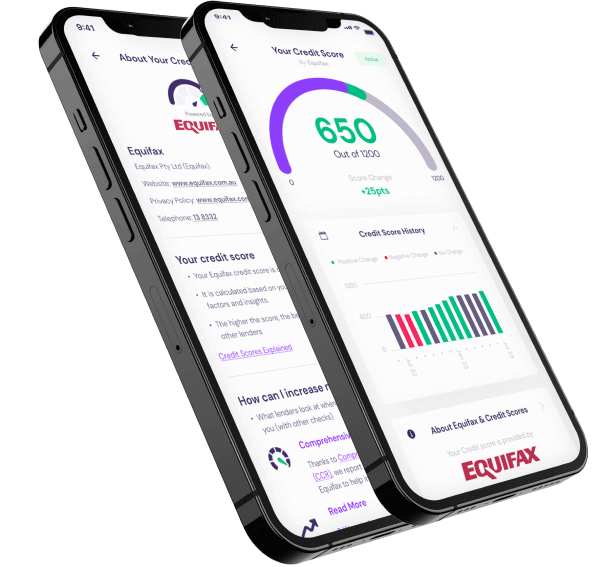
Each provider has a slightly different formula for calculating credit score.
| Equifax | Experian | |
|---|---|---|
| Excellent | 853-1,200 | 800-1,000 |
| Very Good | 735-852 | 700-799 |
| Good | 661-734 | 500-699 |
| Fair / Average | 460-660 | 300-499 |
| Low / Below Average | 0-459 | 0-299 |


 Effortlessly manage your loans

 Facebook
 LinkedIn
 Copy Link